
Your iPhone is one of the devices you use most throughout the day. Whether you're working, browsing, gaming, or staying connected with friends and family, the screen is constantly exposed to fingerprints, dust, keys, coins, and accidental drops. Even with Apple's durable display technology, scratches can develop over time if the screen is not properly protected.
Learning how to prevent iPhone screen scratches is one of the easiest ways to keep your device looking newer for longer. A scratch-free display not only improves your viewing experience but also helps preserve your phone's value if you decide to sell or trade it in later.
This guide from Clear Lizard explains practical screen care tips, the tempered glass benefits that help protect your display, and simple phone maintenance habits that can extend the life of your iPhone screen for years.
Why Is Your iPhone Screen Prone to Scratches?
Although modern iPhone displays are designed to resist everyday wear, they are not completely scratch-proof. Daily contact with hard objects and rough surfaces can gradually leave small marks on the glass, especially if the screen is left unprotected.
Understanding what causes scratches is the first step toward preventing them. Many scratches happen during normal daily activities rather than major accidents.
Everyday Items Can Damage Your Screen
Many people carry their iPhone in the same pocket or bag as keys, coins, or other metal objects. As these items move around, they rub against the screen and may leave fine scratches over time.
Even if the scratches seem minor at first, repeated contact with abrasive materials can make them more noticeable. Keeping your phone in a separate pocket or compartment helps reduce unnecessary contact with hard objects.
Dust and Sand Are More Harmful Than You Think
Dust may seem harmless, but certain particles contain minerals that are harder than glass. Tiny grains of sand are especially abrasive and can leave visible scratches when they move across your screen.
This is why placing your phone face down on rough surfaces or using a dusty cleaning cloth can gradually wear down the display. Keeping both your screen and its surroundings clean is an important part of long-term phone care.
Daily Wear Adds Up Over Time
Not every scratch happens because of a drop. Small amounts of friction from everyday use slowly affect the screen's surface. Sliding your phone across tables, repeatedly placing it in your pocket, or wiping it with unsuitable materials can all contribute to gradual wear.
Building good habits early helps keep your display in better condition throughout the life of your device.
Why a Screen Protector Makes a Difference
One of the most effective ways to prevent iPhone screen scratches is by installing a high-quality screen protector. Instead of allowing the display itself to absorb everyday wear, the protector acts as the first layer of defense.
A properly fitted screen protector helps reduce direct contact between the display and objects that may cause scratches during daily use.
Tempered Glass Benefits
One of the biggest tempered glass benefits is its ability to absorb minor scratches before they reach your iPhone's display. Rather than damaging the original screen, everyday wear affects the protector, which can easily be replaced when necessary.
Tempered glass also provides a smooth touch experience and maintains excellent screen clarity. Many users prefer it because it feels similar to the original display while adding an extra layer of protection.
Protection Against Everyday Accidents
Although no screen protector can guarantee complete protection against every impact, it can reduce damage from many common accidents. Minor bumps, contact with rough surfaces, and objects inside your pocket are less likely to leave permanent marks on the display.
This additional protection is especially valuable for people who frequently travel, work outdoors, or use their phones throughout the day.
Choosing the Right Screen Protector
Not every screen protector offers the same level of protection. Selecting one designed specifically for your iPhone model improves coverage, alignment, and overall durability.
A high-quality protector should fit comfortably without affecting touch sensitivity or screen visibility. Proper installation also plays an important role in ensuring long-term performance.
Simple Screen Care Tips for Everyday Use
Good habits can make just as much difference as using a screen protector. Following a few simple screen care tips each day helps reduce unnecessary wear and keeps your display looking cleaner.
Most of these habits take only a few seconds but can significantly improve the long-term condition of your iPhone screen.
Clean Your Screen the Right Way
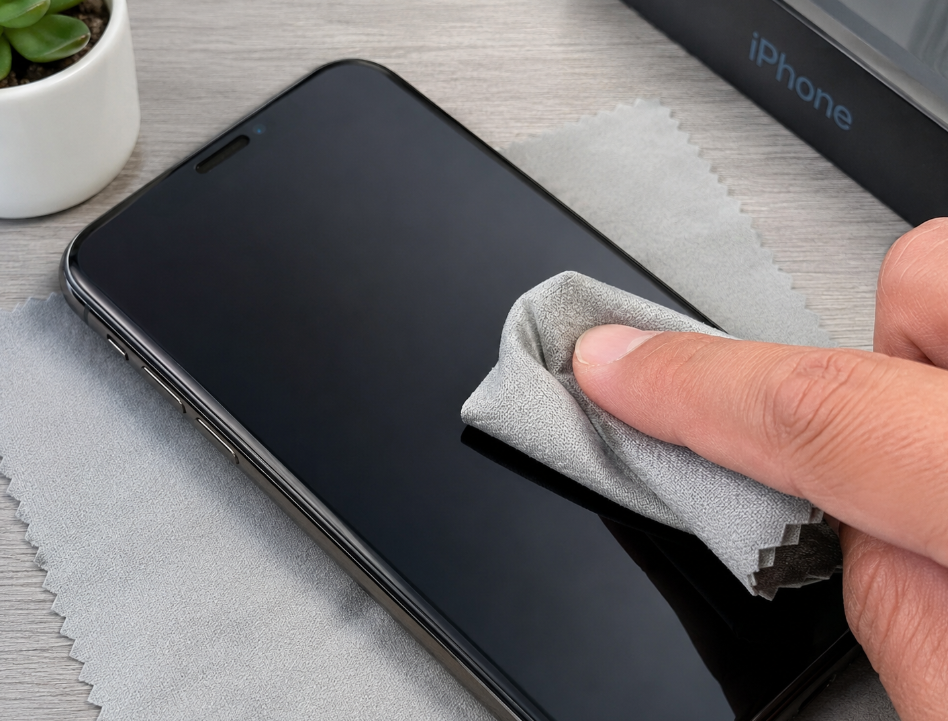
Fingerprints, dust, and oils build up on the screen throughout the day. Cleaning the display regularly with a soft microfiber cloth removes these particles before they can cause unnecessary wear.
Avoid using paper towels, tissues, or rough fabrics because they may contain fibers that can create fine scratches. If additional cleaning is needed, use a screen-safe cleaning solution recommended for electronic devices.
Avoid Placing Your Phone Face Down
Placing your phone face down on tables or countertops increases the chance of the screen coming into contact with dust and rough surfaces. Even smooth-looking surfaces may contain tiny particles that can scratch the glass.
Whenever possible, place your iPhone face up or on a clean, soft surface. This simple habit helps reduce unnecessary contact with abrasive materials.
Store Your Phone Carefully
Where you keep your phone also affects its condition. Carrying it in a pocket with keys, coins, or other metal objects exposes the screen to constant friction throughout the day.
Using a dedicated pocket or compartment helps minimize accidental contact with hard items and supports better phone maintenance over time.
How Regular Phone Maintenance Protects Your Screen
Keeping your iPhone screen scratch-free is not just about using a screen protector. Regular phone maintenance helps reduce everyday wear and ensures your device stays in excellent condition for years. Small maintenance habits can make a noticeable difference in preserving the appearance of your screen.
Keep Your Phone and Case Clean
Dust and debris often collect between your phone and its protective case. Over time, these particles can rub against the edges of the device and even reach the screen during daily use.
Remove your case occasionally and clean both the phone and the inside of the case with a soft microfiber cloth. Keeping these surfaces clean helps prevent dirt from causing unnecessary scratches.
Inspect Your Screen Protector Regularly
A screen protector is designed to absorb everyday wear, but it should be checked from time to time. If you notice deep scratches, cracks, or peeling edges, it may no longer provide the protection your screen needs.
Replacing a worn screen protector before it becomes heavily damaged helps maintain consistent protection for your iPhone display.
Avoid Extreme Conditions
Environmental conditions can also affect your phone over time. Excessive heat, prolonged exposure to direct sunlight, or contact with sand and dust may increase the risk of surface damage.
Whenever possible, keep your iPhone in a clean, moderate environment and avoid placing it where the screen may come into contact with abrasive materials.
Understanding the Role of the Oleophobic Coating
Every modern iPhone display includes an oleophobic coating that improves the user experience. This thin layer is designed to reduce fingerprints and make the screen feel smoother during everyday use. While it offers valuable protection, it requires proper care to remain effective.
What Is an Oleophobic Coating?
An oleophobic coating is a transparent layer applied to the surface of the display during manufacturing. It helps repel natural oils from your fingers, making smudges easier to wipe away while maintaining a smooth touch experience.
Although the coating improves usability, it is not designed to protect against scratches. Using a screen protector remains one of the best ways to preserve both the display and the coating.
How the Coating Wears Down
Like any protective surface, the oleophobic coating gradually wears away with regular use. Frequent cleaning, repeated swiping, and exposure to harsh chemicals can reduce its effectiveness over time.
As the coating becomes thinner, fingerprints may become more noticeable, and the screen may no longer feel as smooth during everyday use.
Protecting the Oleophobic Coating
Using a microfiber cloth for routine cleaning helps preserve the coating longer. Avoid household cleaners, abrasive cloths, or alcohol-based products that are not intended for electronic displays.
Installing a quality tempered glass screen protector also helps reduce direct contact with the original screen, allowing the coating underneath to last longer.
Common Mistakes That Can Scratch Your iPhone Screen
Many scratches occur because of everyday habits that people rarely think about. Recognizing these common mistakes can help you better prevent iPhone screen scratches and extend the life of your display.
Carrying Your Phone with Sharp Objects
One of the most common causes of scratches is placing your phone in the same pocket as keys, coins, or other metal objects. As these items move during normal activity, they can create fine marks on the glass.
Keeping your phone in a separate pocket or dedicated compartment is a simple way to reduce unnecessary contact with hard materials.
Using the Wrong Cleaning Materials
Many people clean their screens with tissues, paper towels, or rough fabrics. While these materials may appear soft, they can contain fibers that gradually wear the surface of the display.
A clean microfiber cloth is specifically designed for electronic screens and removes fingerprints without causing additional wear.
Ignoring Small Signs of Damage
Small scratches, chipped screen protectors, or peeling edges are often ignored because they do not immediately affect the phone's performance. However, these minor issues can become more serious if left unaddressed.
Inspecting your screen and replacing a damaged screen protector when necessary helps maintain reliable protection and keeps your display looking its best.
Final Thoughts
Learning how to prevent iPhone screen scratches does not require expensive accessories or complicated maintenance routines. Consistent care, thoughtful handling, and the right protective accessories can significantly reduce the risk of everyday damage.
Following practical screen care tips, understanding the tempered glass benefits, and maintaining your device regularly all contribute to a cleaner and more durable display. Taking care of the oleophobic coating and replacing worn screen protectors when needed also helps preserve the look and feel of your iPhone over time.
By combining good habits with proper phone maintenance, you can keep your iPhone screen looking clear, responsive, and scratch-free for years. Clear Lizard encourages users to choose accessories that fit their device correctly and support long-term screen protection.
Frequently Asked Questions
1. Can an iPhone screen still scratch without a major drop?
Yes. Most scratches develop during everyday use from contact with keys, coins, sand, dust, or rough surfaces rather than from accidental drops.
2. What are the tempered glass benefits?
Tempered glass helps absorb everyday scratches and minor impacts before they reach the original display. It also maintains good touch sensitivity and screen clarity while adding an extra layer of protection.
3. Does the oleophobic coating prevent scratches?
No. The oleophobic coating is designed to resist fingerprints and improve touch performance. It does not make the screen scratch-proof, which is why using a screen protector is still recommended.
4. How often should I replace my screen protector?
Replace your screen protector if it becomes cracked, heavily scratched, or starts peeling around the edges. A damaged protector provides less effective protection for your display.
5. What is the best way to prevent iPhone screen scratches?
The best approach is to use a quality tempered glass screen protector, follow good screen care tips, keep your phone away from sharp objects, and practice regular phone maintenance to reduce everyday wear.


Share:
Do You Really Need a Screen Protector for iPhone 16 and iPhone 17? Experts Explain
Which iPhone Screen Protector Should You Buy? Complete Guide for iPhone 11 to iPhone 17