
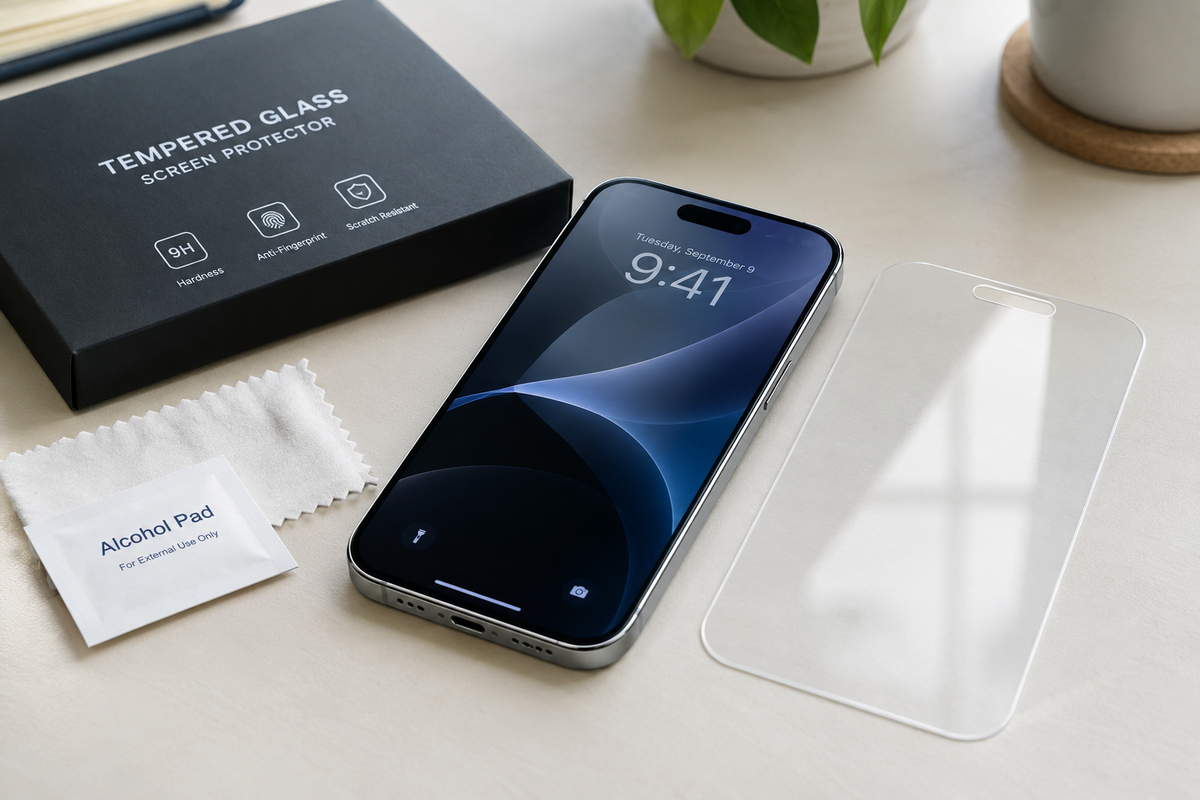
Choosing the right tempered glass screen protector for your iPhone 18 is an important step in keeping your phone’s display protected during everyday use. From accidental scratches to minor impacts, a suitable screen protector adds a layer of protection without significantly affecting how you use your device. However, not all protectors offer the same fit, clarity, edge coverage, or touch response.
If you are comparing options, it helps to understand which features matter most before making a purchase. The best choice should fit your iPhone 18 properly, preserve the display’s visual quality, respond accurately to touch, and work well with your phone case.
Why Choose a Tempered Glass Screen Protector?
Tempered glass screen protectors are designed to provide a protective layer over a smartphone display. They are generally rigid, smooth to the touch, and designed to help reduce the risk of scratches and damage from minor everyday impacts.
Although a protector cannot guarantee that your screen will remain undamaged, it can help protect against common sources of wear, including contact with keys, coins, and other objects carried in a pocket or bag.
Protection Against Scratches and Everyday Wear
Your phone screen comes into contact with many surfaces throughout the day. Even when you handle your device carefully, small particles and rough materials can leave scratches over time.
A tempered glass screen protector provides a sacrificial surface that may take the damage instead of the original display. Its effectiveness depends on the glass quality, construction, and the type of impact or abrasion involved.
A Smooth and Familiar Touch Experience
A good screen protector should feel comfortable when you swipe, type, scroll, or play games. Tempered glass generally offers a smooth surface that closely resembles the feel of a bare smartphone display.
The finish also matters. A protector with an unsuitable coating or poor surface quality may feel less smooth or collect fingerprints more easily, making it important to consider both protection and everyday usability.
Check the Fit for iPhone 18
Fit is one of the most important factors when choosing an iPhone 18 tempered glass screen protector. A protector designed for a different phone model may not align correctly with the display, sensors, or edges.
Before purchasing, confirm that the product is specifically listed as compatible with your exact iPhone model. Do not assume that a protector made for an earlier iPhone will fit simply because the phones look similar.
Look for Accurate Cutouts and Alignment
A properly designed protector should align with the display and any relevant front-facing components. Poor alignment can interfere with the intended coverage or make installation difficult.
Some protectors use an installation frame to help position the glass accurately. This can be useful for reducing alignment errors, especially if you have limited experience applying screen protectors.
Consider Case Compatibility
The edges of a screen protector need to work with your phone case. If the glass extends too close to the edge or the case presses against it, the protector may lift over time.
A case-compatible design leaves appropriate clearance around the edges while providing practical coverage. If you already own a case, check the manufacturer's compatibility guidance before choosing your protector.
Choose Clear Glass That Preserves Display Quality
Display clarity is another important consideration when comparing a tempered glass screen protector. A good protector should allow you to view text, images, and videos without noticeable haze, distortion, or unnecessary changes in brightness.
Look for High Transparency
Clear glass is designed to preserve the appearance of the display. Low-quality materials or poorly applied coatings can affect how the screen looks, particularly when viewing detailed images or reading small text.
When comparing products, review information about transparency and optical clarity where available. Customer feedback can also help identify recurring concerns about haziness, reflections, or changes in display quality.
Consider Fingerprint-Resistant Coatings
An oleophobic coating helps reduce the appearance of fingerprints and makes the glass easier to wipe clean. It does not prevent fingerprints entirely, but it can make everyday maintenance simpler.
The quality and durability of the coating can vary between products. Look for clear product specifications rather than assuming that every tempered glass protector offers the same level of fingerprint resistance.
Evaluate Edge Coverage and Glass Design
Screen protectors differ in how much of the display they cover. Some focus on the central viewing area, while others extend closer to the edges.
Full-Coverage Versus Case-Friendly Designs
A full-coverage protector aims to cover more of the front display, including areas closer to the edges. A case-friendly protector may leave a small gap around the perimeter to prevent contact with a protective case.
Neither design is automatically better for every user. The right option depends on the shape of the display, the type of case you use, and your preference for coverage versus compatibility.
Pay Attention to Edge Finishing
Smoothly finished edges can make a protector more comfortable to use and less noticeable during swiping gestures. Poorly finished edges may feel sharp, collect dust, or become more vulnerable to lifting.
Before purchasing, check product images and specifications for details about the edge design. Reviews mentioning edge lifting or installation difficulties may also help you compare options.
Make Sure Touch Response Remains Accurate
A screen protector should not make routine interactions noticeably more difficult. Typing, tapping icons, scrolling through apps, and using gestures should remain comfortable and responsive.
Check Touch Sensitivity
Touch performance depends on several factors, including glass thickness, installation quality, adhesive coverage, and compatibility with the device. A poorly fitted protector or one with uneven adhesive may cause problems that are not present with a properly installed product.
Choose a protector designed for the exact device and follow the installation instructions carefully. If you notice reduced responsiveness after installation, check for trapped air, incomplete adhesion, or compatibility issues.
Consider Your Everyday Activities
Your ideal protector may depend on how you use your phone. Someone who frequently types messages or plays mobile games may prioritize smooth swiping and accurate touch response, while someone who mainly browses, reads, and watches videos may place greater emphasis on clarity and easy cleaning.
Considering your routine helps you choose a protector based on practical needs rather than marketing claims alone.
Understand Installation and Adhesive Quality
Even a high-quality tempered glass screen protector can perform poorly if it is installed incorrectly. Dust, fingerprints, or trapped air can affect the appearance and adhesion of the glass.
Look for an Easy Installation Process
Some products include an alignment frame, cleaning wipes, dust-removal stickers, and instructions. These accessories can make installation easier by helping you prepare the display and position the glass accurately.
Before applying the protector, clean the screen thoroughly and choose a dust-free environment. Follow the manufacturer's instructions rather than rushing through the process.
Check for Secure Adhesion
Consistent adhesion helps the protector sit flat against the display. Poor adhesive coverage may lead to bubbles, uneven touch response, or edges that lift during regular use.
A well-installed protector should sit evenly across the intended coverage area. If bubbles remain after installation, consult the product instructions to determine whether they can be removed safely.
Compare Durability Without Relying on Marketing Claims
Terms such as hardness ratings and impact resistance can help describe a product, but they should not be the only factors in your decision. A high hardness rating does not mean that glass is impossible to scratch or break.
Understand What Hardness Ratings Mean
Some screen protectors advertise a 9H hardness rating. This typically refers to a pencil-hardness test and should not be interpreted as proof that the protector is unbreakable or resistant to every type of scratch.
Look at the overall construction, fit, adhesive quality, and warranty terms alongside any hardness claims. These details provide a more useful picture of what to expect during everyday use.
Know the Limits of Screen Protection
Tempered glass can help reduce scratches and may absorb some impact, but it cannot guarantee protection against every drop or collision. Damage depends on factors such as impact force, the angle of the fall, the surface involved, and whether the phone has a protective case.
Using a compatible case alongside a screen protector can provide more comprehensive protection than relying on either product alone.
How to Choose the Right Tempered Glass Screen Protector
When comparing options, focus on the features that will make the biggest difference to your everyday experience. Confirm exact iPhone 18 compatibility, check display clarity, consider edge coverage, and look for a design that works with your case.
It is also worth reviewing the installation accessories, adhesive design, fingerprint-resistant coating, and available warranty. Customer reviews can provide useful context, particularly when multiple users report the same issue with alignment, touch response, or edge lifting.
For shoppers exploring Clear Lizard, compare the available product specifications against these criteria to determine which option best suits your device and preferences. Choosing based on compatibility and practical features can help you avoid paying for features you do not need.
Final Thoughts
The best tempered glass screen protector for iPhone 18 should offer a suitable fit, clear viewing, reliable touch response, and edge coverage that works with your case. Installation quality and adhesive performance also matter because even well-made glass can be frustrating when it does not sit correctly on the display.
Before purchasing, verify the exact model compatibility and review the product's specifications carefully. A thoughtfully chosen protector, combined with a suitable phone case and careful handling, can help keep your display in better condition during everyday use.
Frequently Asked Questions
1. What should I look for in a tempered glass screen protector?
Look for exact device compatibility, good optical clarity, smooth touch response, suitable edge coverage, reliable adhesion, and compatibility with your phone case. Easy installation and a fingerprint-resistant coating can also be useful features.
2. Is tempered glass better than a film screen protector?
Tempered glass is generally more rigid and can provide a glass-like feel, while film protectors are often thinner and more flexible. The better choice depends on your preferences for feel, coverage, installation, and the type of protection you need.
3. Does a tempered glass screen protector affect touch sensitivity?
A properly fitted, compatible protector should generally allow normal touch interactions. Problems can occur if the glass is poorly installed, has uneven adhesion, or is not designed for the device.
4. Does a 9H hardness rating mean a screen protector cannot scratch?
No. A 9H rating commonly refers to pencil-hardness testing and does not mean the protector is scratch-proof or unbreakable. Actual performance depends on the material, construction, and conditions of use.
5. Should I choose a full-coverage screen protector?
A full-coverage design may cover more of the display, but case compatibility is important. If your phone case presses against the edges, a case-friendly protector may be a better fit.
6. Can a tempered glass screen protector prevent a cracked iPhone screen?
It may help reduce the risk of display damage in some situations, but it cannot guarantee that the screen will not crack. Impact force, drop angle, and the surface involved all affect the outcome.


Share:
Are iPhone 18 Screen Protectors Worth It? Pros, Cons, and Buying Tips
Privacy Screen Protector for iPhone 18: Is It Worth It?