
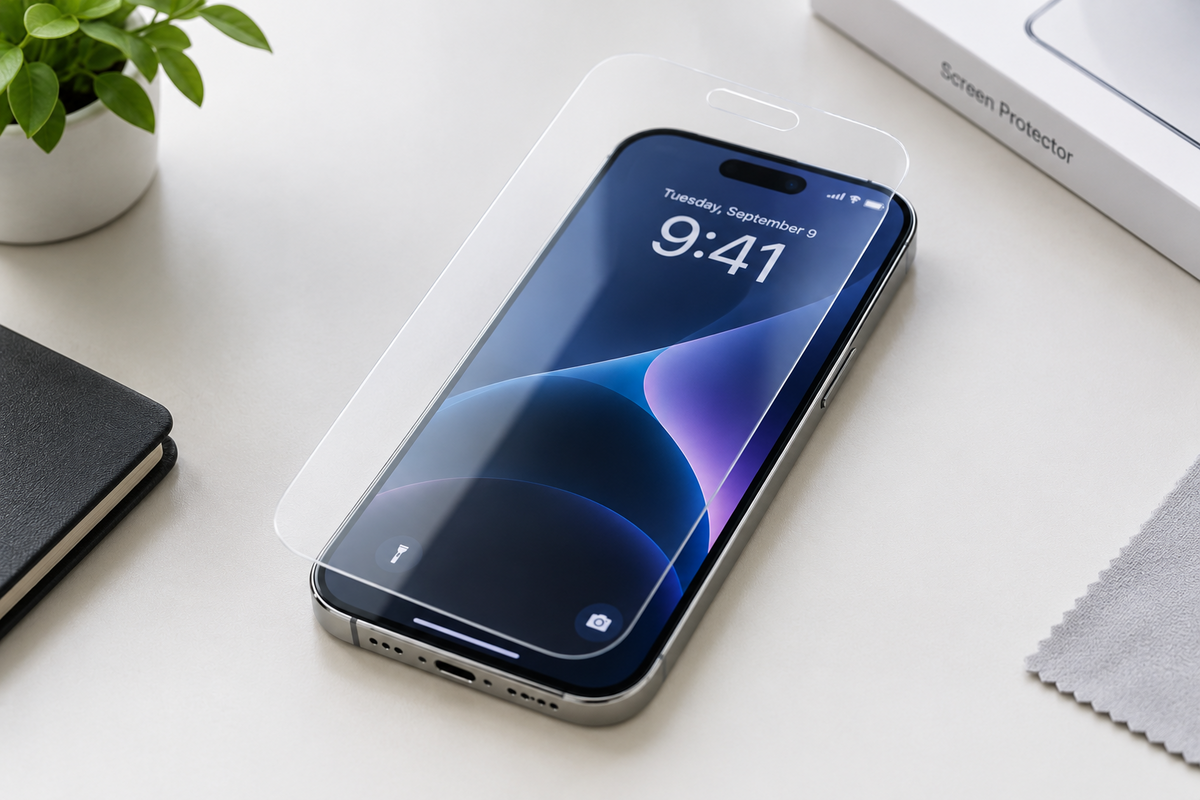
Choosing the right screen protector for your iPhone 18 involves more than finding a piece of glass that covers the display. Different protectors offer different levels of scratch resistance, viewing clarity, edge coverage, and everyday usability. The right option should protect your screen while allowing you to use your phone comfortably for messaging, browsing, streaming, and other daily tasks.
This iPhone 18 screen protector buying guide explains the key features to compare before purchasing. From material and fit to touch response and case compatibility, understanding these factors can help you choose a screen protector that suits your needs and budget.
Understand the Different Types of Screen Protectors
Before comparing individual products, it helps to understand the main types of screen protectors available. Each type offers a different balance of protection, clarity, flexibility, and privacy.
Tempered Glass Screen Protectors
Tempered glass protectors are popular because they provide a rigid protective layer and a smooth surface that feels similar to a phone's original glass display. They can help reduce scratches and may absorb some impact, although they cannot guarantee that the screen will remain undamaged after a drop.
When comparing an iPhone 18 glass screen protector, consider its thickness, edge finishing, adhesive quality, and stated compatibility. A well-designed protector should sit evenly on the display without interfering with normal touch interactions.
Film Screen Protectors
Film protectors are typically thinner and more flexible than tempered glass. Depending on the material, they can provide protection against everyday scratches while maintaining a relatively unobtrusive feel.
However, film products may feel different from glass and may not offer the same level of resistance to certain impacts. They can be worth considering if you prefer a thin layer of protection or need a flexible design.
Privacy Screen Protectors
Privacy protectors use a filtering structure to restrict visibility from certain angles. They can be useful when checking messages, emails, or other information in public places.
The trade-off is that privacy filters may reduce perceived brightness or change the viewing experience. If you often share your screen with other people or watch videos from different angles, consider whether this restriction will suit your routine.
Compare the Level of Protection
Protection is usually the first feature shoppers consider, but product claims can be difficult to compare without understanding what they mean.
Scratch Resistance
A screen protector can help reduce scratches caused by contact with everyday objects and surfaces. However, scratch resistance varies by material and construction, and no protector is completely immune to damage.
Look for clear product specifications rather than relying only on broad claims such as premium strength or maximum protection. It is also useful to consider how you carry your phone and whether it regularly shares a pocket or bag with keys, coins, or other objects.
Impact Protection
Tempered glass may help absorb some impact and can sometimes crack in place of the original display. The outcome depends on the force, angle, and surface involved, so even a durable screen protector cannot prevent every screen crack.
For more complete everyday protection, consider using a compatible phone case alongside your screen protector. A case can help protect the phone's edges and corners, which are often exposed during drops.
Understand Hardness Ratings
Some screen protectors advertise a 9H hardness rating. This generally refers to a pencil-hardness test and should not be interpreted as proof that the product is unbreakable or resistant to every type of scratch.
Compare hardness claims alongside the material, design, fit, and available warranty information. A single rating does not tell you everything about how a protector will perform in everyday use.
Check Display Clarity and Visibility
A screen protector should not make routine phone use unnecessarily difficult. Display clarity matters when reading small text, viewing photographs, watching videos, or using apps with detailed visuals.
Choose a Clear Finish
Clear protectors are designed to preserve the display's appearance. However, differences in material quality, coatings, and installation can affect how sharp or bright the screen looks.
Look for product information about transparency and optical clarity. Customer feedback can also help identify recurring concerns about haze, reflections, or visible imperfections.
Consider Anti-Glare and Privacy Features
Some protectors use matte finishes to reduce reflections, while privacy protectors limit viewing from the sides. These features can improve the experience in specific situations, but they may also change how the display looks.
A matte surface can make the screen appear less glossy, while a privacy filter may reduce perceived brightness. Choose these options based on where and how you use your phone rather than assuming that extra features are always better.
Make Sure the Protector Fits Your iPhone 18
Compatibility is essential when buying a screen protector. A product made for another phone model may not align correctly with the display or provide the intended coverage.
Confirm Exact Model Compatibility
Check that the product is explicitly listed for your exact iPhone model. Similar names or appearances do not guarantee that screen dimensions, cutouts, and edge shapes are identical.
Before purchasing, review the manufacturer's compatibility details. Avoid assuming that a protector designed for an earlier model will fit the iPhone 18 correctly.
Compare Edge Coverage
Screen protectors vary in how close they extend to the display's edges. Full-coverage designs aim to cover more of the front surface, while case-friendly designs may leave a small gap around the perimeter.
The best option depends on your preferred coverage and the case you use. If a case presses against the protector's edges, it may cause the glass to lift over time.
Review Installation Accessories
Some protectors include alignment frames, cleaning wipes, and dust-removal stickers. These accessories can make installation easier by helping you position the glass and prepare the display.
Even a well-made product can look poor if dust becomes trapped underneath it. Follow the installation instructions carefully and apply the protector in a clean environment.
Evaluate Touch Response and Everyday Usability
A screen protector should allow you to use your phone naturally. Typing, scrolling, tapping, and swiping should remain comfortable after installation.
Look for Smooth Touch Performance
Touch performance depends on the protector's design, thickness, adhesive coverage, and compatibility with the device. Poor installation or uneven adhesion can create problems that may not occur with a properly fitted protector.
Review product feedback for repeated complaints about touch responsiveness. Once installed, test common interactions to make sure the screen responds as expected.
Consider Fingerprint-Resistant Coatings
Many glass protectors feature an oleophobic coating intended to reduce fingerprints and make the surface easier to clean. The effectiveness and durability of these coatings vary by product.
If you use your phone frequently throughout the day, a smooth, easy-to-clean surface can make a noticeable difference. However, fingerprint resistance does not mean the screen will remain completely free of smudges.
Compare Durability and Long-Term Value
The cheapest screen protector may not always provide the best value, particularly if it is difficult to install or repeatedly lifts around the edges.
Review Product Quality and Warranty Terms
Look for clear information about the materials, included accessories, installation process, and replacement or warranty terms. A transparent policy can make it easier to understand what support is available if the protector arrives damaged or develops a covered issue.
Reviews can help you assess common experiences, but consider recurring patterns rather than relying on a single positive or negative comment.
Consider Replacement Costs
Screen protectors are consumable accessories. They may need replacement if they crack, become heavily scratched, lose adhesion, or develop other defects.
When comparing prices, consider how easy the protector is to install and whether replacement options are available. A product that suits your needs and remains properly fitted may provide better value than one chosen only because it has the lowest initial price.
How to Choose the Right Screen Protector for Your Needs
The right protector depends on which features matter most in your daily routine. If you want a smooth surface and a familiar viewing experience, tempered glass may be a practical choice. If you prefer a thinner and more flexible layer, film may suit you better. If you regularly use your phone in public and want to reduce side visibility, a privacy protector may be worth considering.
For shoppers comparing options from Clear Lizard, review the available product specifications against your priorities. Focus on exact model compatibility, protection claims, visibility, edge coverage, touch response, and case compatibility rather than choosing based on marketing language alone.
A suitable screen protector should work with your phone rather than make everyday use more complicated.
Final Thoughts
Choosing a screen protector for your iPhone 18 is easier when you compare practical features instead of focusing on one specification. Material, scratch resistance, impact performance, clarity, edge coverage, installation, and touch response all influence the overall experience.
Before buying, confirm the exact model compatibility and check whether the protector suits your case and daily habits. Pairing a suitable screen protector with a compatible case can provide a practical approach to protecting your phone while keeping it comfortable to use.
Frequently Asked Questions
1. What should I look for when buying an iPhone 18 screen protector?
Compare material, scratch resistance, display clarity, edge coverage, touch response, adhesive quality, and case compatibility. Exact model compatibility should be confirmed before purchasing.
2. Is tempered glass the best option for an iPhone 18 screen protector?
Tempered glass is a popular option because it offers a rigid surface, a familiar feel, and protection against many everyday scratches. However, film and privacy protectors may be more suitable for specific preferences or usage situations.
3. Does a more expensive screen protector offer better protection?
Not necessarily. Price alone does not guarantee better performance. Compare the materials, product specifications, fit, installation accessories, warranty terms, and customer feedback before deciding.
4. Can a screen protector prevent an iPhone screen from cracking?
A screen protector may help reduce the risk of damage in some situations, but it cannot guarantee that the original display will not crack. Drop height, impact angle, and the surface involved all affect the outcome.
5. Should I choose a privacy screen protector or clear glass?
Choose privacy glass if you regularly use your phone in public and want to limit side visibility. Clear glass is generally more suitable if you prioritize an unobstructed viewing experience and display clarity.
6. Can I use a screen protector with a protective case?
Yes, many screen protectors are designed to work with phone cases. Check compatibility before buying, as some cases may press against the protector's edges and cause lifting.


Share:
Privacy Screen Protector for iPhone 18: Is It Worth It?
Does an iPhone 18 Screen Protector Prevent Cracks and Scratches?